I’ve been interested in how people learn about their health since I was a teenager myself. So much of it comes from the media we already pay attention to, and so much of it is missing. These projects are where I first dug into that question seriously, and they still shape how I think about every audience I write for.
← All work
Who gets left out of health information
Three research projects on the gaps between people and the health information they need, and what media, clinics, and employers can do to close them.
- Institution
- University of Oregon, School of Journalism and Communication
- Work
- Honors thesis (2020) · White paper (2021) · Master’s terminal project (2021)
- Skills
- Focus
- Sexual, reproductive, and fertility health; access to information
- Note
- Published under my maiden name, Makenna Crocker
Why this matters to me
What teen TV teaches about health
Undergraduate honors thesis · Spring 2020
The Representation of Female Sexual and Reproductive Health in Televised and Streamed Shows Targeting Girls Aged 10–18 Years
The question
Teenagers learn more about sexual health from television than from doctors or school. So what are the most popular shows actually teaching them?
What I did
A qualitative content analysis of the most-watched Disney Channel and Netflix shows for girls aged 10–18, including Andi Mack, KC Undercover, Stranger Things, Elite, and Sex Education. I looked at how each show handled sexual health in its plotlines, how characters’ identities and development were portrayed, and whether it showed the risks or benefits of sexual activity.
What I found
- Shows for preteens had little to no representation of puberty, and no discussion of sex.
- Shows for older teens depicted very sexually active high schoolers with very little discussion of condom use.
- Sexual behavior was often tied to negative consequences.
Writers and producers have a real opportunity to represent these topics accurately, in the places young people are already paying attention.
#InstaMoms
White paper to the fertility industry · 2021
The spark
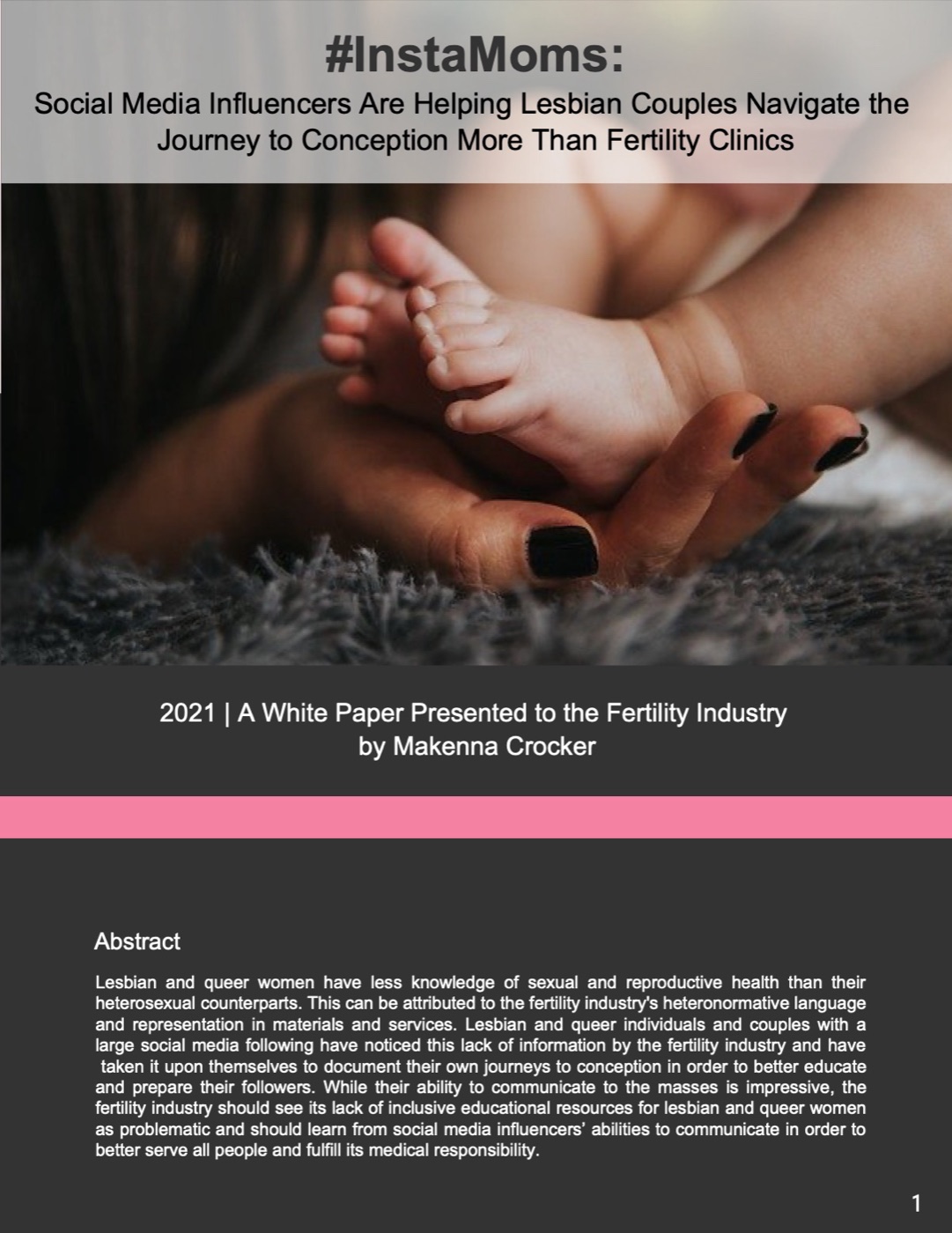
I noticed lesbian and queer influencers sharing their fertility journeys in remarkable detail: choosing a donor, deciding who would carry, the costs, the legal paperwork. Their audiences were huge, and many of them said the same thing. The information they needed hadn’t come from their clinics.
The argument
The research backed that up. One 2016 study found that 54.5% of fertility clinic websites with information for heterosexual couples had none for LGBT couples. I used communication theory (diffusion of innovations, two-way interactive communication, and accessibility) to explain why influencers were reaching people when clinics weren’t, and what the fertility industry could learn from them.
In Good Company
Master’s terminal project · June 2021
In Good Company: The Importance of Inclusive Fertility Benefits for Lesbian and Queer Employees
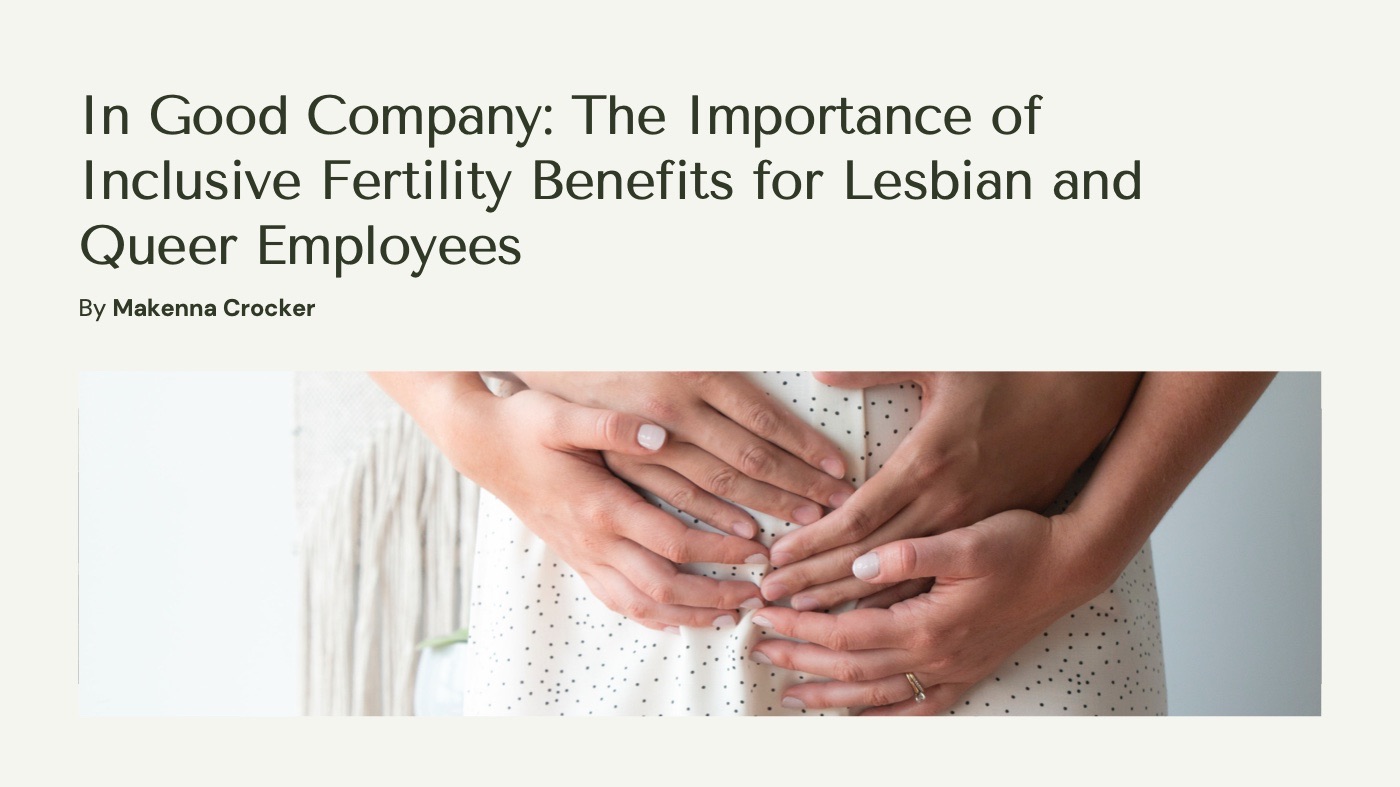
I followed the same question into the workplace. Through secondary research and an interview with someone navigating fertility care, I looked at how insurance and employer benefits leave lesbian and queer employees behind, and what brands can do about it.
Problem
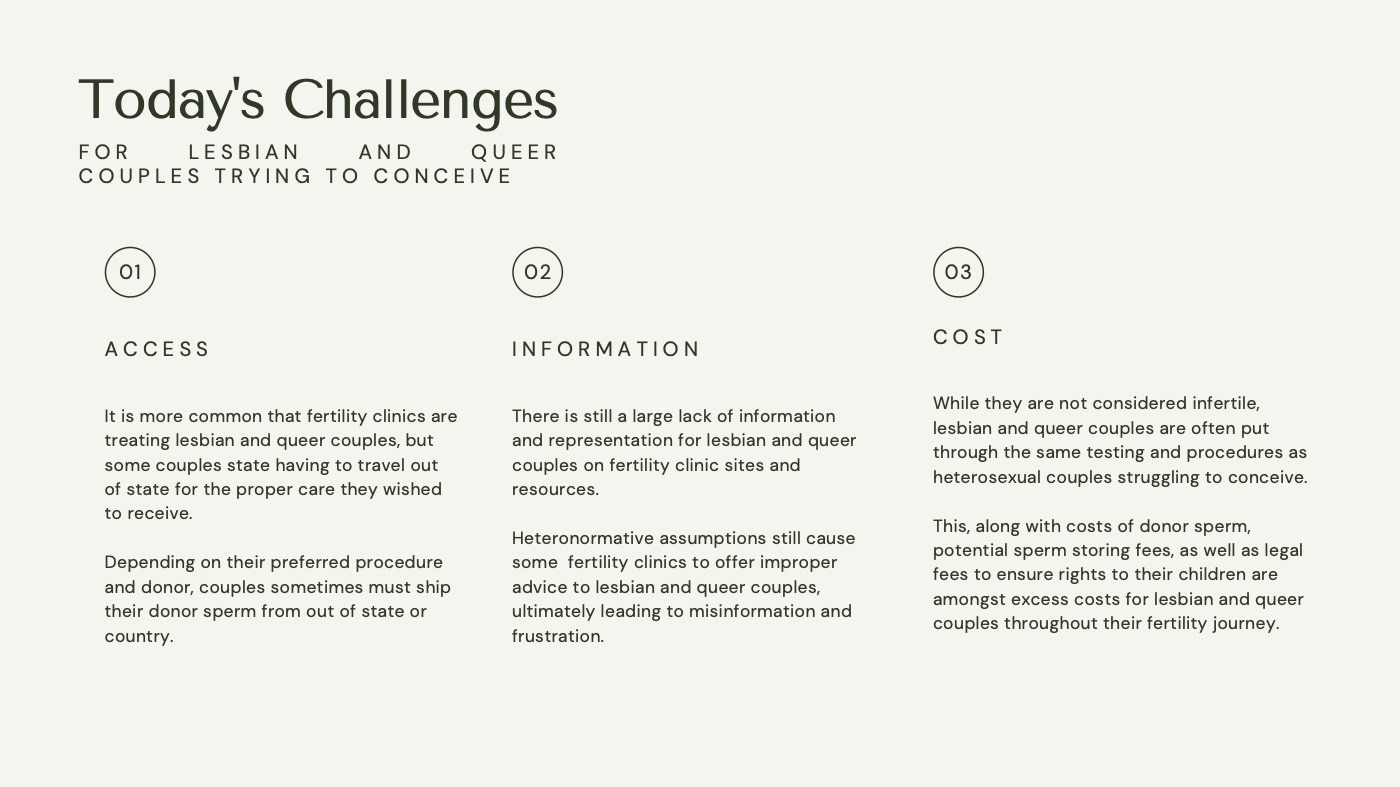
Insurance often only covers fertility treatment after a diagnosis of infertility, a process built around heterosexual couples. Lesbian and queer couples who need donor sperm can face rounds of expensive testing just to qualify, or no coverage at all.
Recommendation
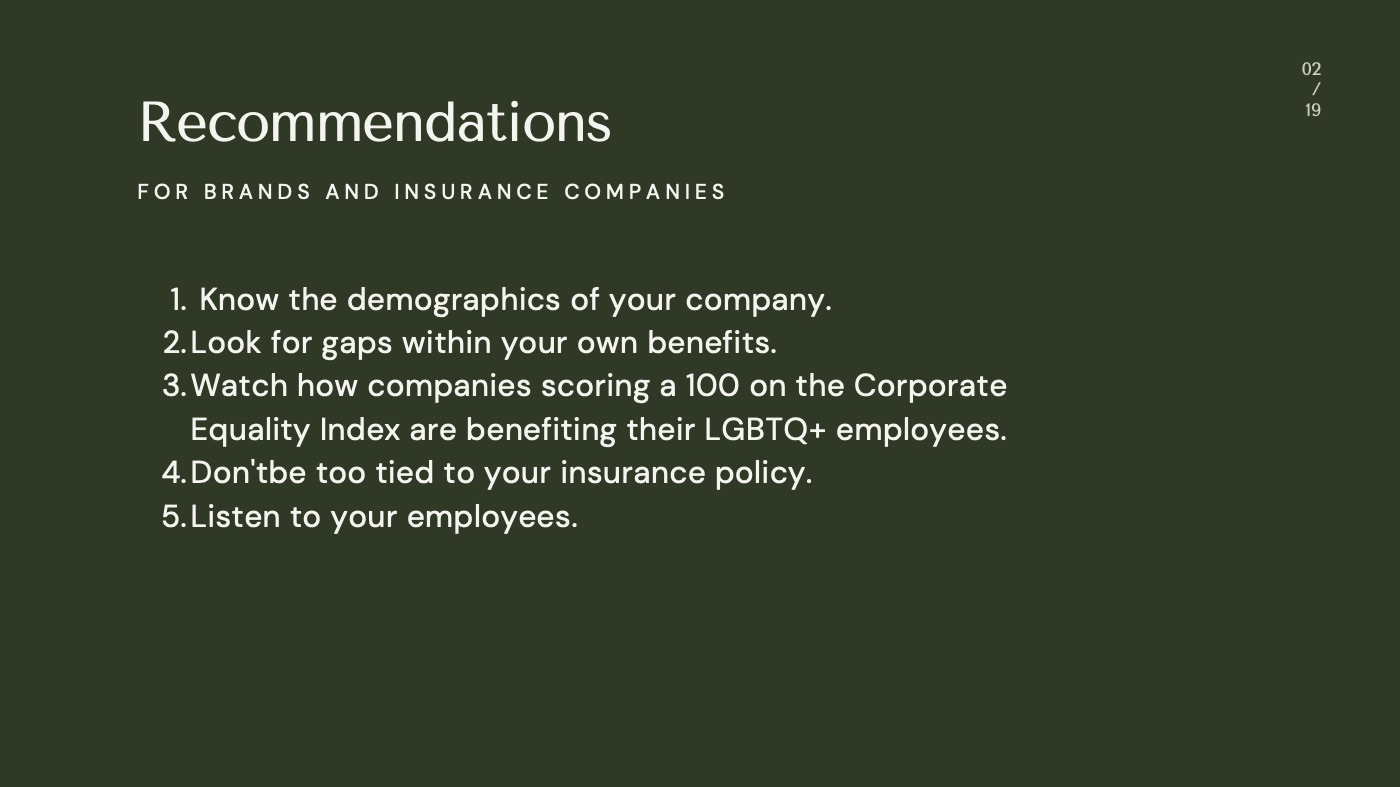
Brands have purchasing power with insurers. They should know who their employees are, look for gaps in their own benefits, learn from companies that score 100 on the Corporate Equality Index, stay flexible, and listen to their people.
What carries over
This research uses the same skills I bring to every role, pointed at the questions I care about most:
- Listening before writing. Each project started from real people’s experiences, the same way a good campaign starts from the audience.
- Turning findings into recommendations. Insight only matters if someone can act on it, whether that’s a TV writer, a fertility clinic, or an HR team.
- Writing about sensitive topics with care. Clear, respectful language builds trust, especially when the subject is personal.